


Vytautas Magnus University (VMU) is once again inviting audiences to mark October – Month of the Lithuanian Diaspora. Now in its sixth year, the initiative encourages people throughout October to explore the history of the Lithuanian diaspora, the work of its communities and Lithuanian schools abroad, and the creative contributions of diaspora artists. The month-long program unites the initiatives of VMU, cultural and academic institutions, organizations, and independent researchers and creators dedicated to diaspora-related themes.
The Lithuanian World Community (LWC) is an active member of the initiative, encouraging participation in numerous diaspora events and activities starting in late September.
 Vytautas Magnus University announces a foreign Lithuanian scholarship competition for VMU students.
The foreign Lithuanian scholarship is awarded to the same person once during the entire period of study. The scholarship amount is 1000 EUR.
Documents are accepted until October 15... read more.
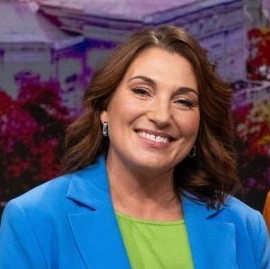 The lecture will take place in person and online at 15:00 Lithuanian time, at Jonavos St. 66, Room 208.
Language: English
The lecture will explore the Polish minority in Lithuania through Rogers Brubaker’s concept of “accidental diaspora” – a community created not by people crossing borders, but by borders crossing people. It will examine how post-war border shifts, and the identity politics of both Poland and Lithuania have shaped the identity and sense of belonging of Lithuanian Poles. Drawing on ethnographic research, the lecture will also address the sense of historical abandonment, the role of “guardians of Polishness,” and the strong attachment to the Vilnius Region as an ancestral homeland.
The lecture will be held in English and will last approximately one hour.
Anna Ewa Pilarczyk-Palaitis, PhD, is a researcher and lecturer at the Centre for Social Anthropology at Vytautas Magnus University in Kaunas, Lithuania. Her research interests include identity, memory, and ethnic minorities in Central and Eastern Europe. She is the author and co-author of a growing body of academic publications and is actively involved in international research projects. As a social anthropologist, she combines ethnographic research with public engagement, collaborating with museums and UNESCO heritage initiatives, and working in documentary filmmaking and podcasting to bring academic knowledge into broader public dialogue. She is also a board member of the Lithuanian Anthropological Association.
 The lecture will take place at 16:00. at the President Valdas Adamkus Library-Museum, S. Daukanto St. 25, Kaunas.
Join via Teams:
Join Luca Ripani as he talks about the city arguably seen as the center of the Lithuanian diaspora outside Europe: Chicago, Illinois. As Chicago has changed along with the nation, learn how the diaspora has spread from the humble community of Marquette Park across the larger Chicagoland area, and hear from Luca about his own connections to Lithuania and what drew him to teach in Lietuva.
Luca Ripani currently serves as a Fulbright English Teaching Assistant at Adolfas Šapoka Gymnasium in Utena. As a Fulbright ETA, he teaches English and American studies and helps to bridge the cultures of Lithuania and the United States.
A native of Chicago, Illinois, Luca's Lithuanian heritage led him to work as a Docent at the Balzekas Museum of Lithuanian Culture, the only Lithuanian culture museum in the nation. Through this role, he was able to interact with visitors daily and learn more about the Lithuanian-American diaspora in Chicago and all over the nation, including how people engage with their own Lithuanian identity.
 The meeting will take place at 17:00 at the President Valdas Adamkus Library-Museum. Link to the Facebook event.
The VMU Lithuanian Emigration Institute and the President Valdas Adamkus Library-Museum invite you to meet actress and director Audrė Budrys and writer and actor Kęstutis Nakas. This event offers an opportunity to get to know the guests from Chicago, who will share their stories. Audrė Budrys will also read poems by Liūnė Sutema and excerpts from her own writing. Kęstutis Nakas will read excerpts from his latest work.
Audrė Budrys Nakas is a theatre educator, director, writer, and actress. She wrote the play “Unė Baye,” about the life of the legendary Lithuanian actress Unė Babickaitė-Baye, and also performs the leading role. The play has been staged both in Lithuanian diaspora theatres and on American stages. In 2019, she created the solo performance “As in a Fairy Tale,” exploring the life and work of Liūnė Sutema. Audrė leads theatre workshops at the University of Chicago and reads Lithuanian poetry at cultural events.
Kęstutis Nakas is a writer, actor, director, and theatre educator. In the 1980s, he became actively involved in New York’s East Village theatre scene, creating experimental theatre productions, performance art, and television shows. He writes plays in English. His best-known play, “When Lithuania Ruled the World,” is a postmodern, four-part tragic farce about Lithuanian history in the 13th and 15th centuries. It has been performed numerous times on American stages and was also published as a book in Lithuania in 2017.
 On October 7 at 18:00, “Concrete”, an exhibition of paintings by artist of Lithuanian descent Eva Galiauskas, will open in the vaulted basement hall of VMU Art Gallery “101” (Muitinės St. 7, Kaunas). Artist E. Galiauskas, visiting from Toulon, France, and her brother, composer Romuald Chaloin Galiauskas, will attend the opening and give an audiovisual performance.
Today, when traces of the occupation remain visible—in architecture, language, and mentality—“Concrete” invites us to view these legacies not as shameful scars, but as witnesses that we must understand, integrate, and move beyond. It is a kind of act of reclamation: acknowledging the wounds of the past so that we can build the present with confidence. The exhibition presents paintings depicting folk motifs and the concrete Soviet legacy, painted on wooden panels using collage techniques.
The exhibition will run until October 30.

Kaunas Ąžuolynas Library invites you to an evening of reminiscences dedicated to Kazys Bradūnas.
The event will take place at 17:30 h in the event hall on the 3rd floor, K. Donelaičio St. 8.
During the evening:
Kazys Bradūnas (1917–2009) was born in the village of Kiršai, in Alvitas rural district, Vilkaviškis County. In 1944, he fled to Germany and later moved to the United States. Living in exile, he sought to preserve and nurture the Lithuanian language and culture within his family and the émigré community. Both his identity and his poetry were deeply rooted in his nation’s history, language, and culture. Homesickness and a desire to contribute to his homeland’s cultural revival brought him back to Lithuania in 1992, making him one of the first émigrés to return.
 The lecture will take place on October 13 (Tuesday), 14:00–15:30, at K. Donelaičio St. 52, Room 302.
Language: Lithuanian
 Kaunas Ąžuolynas Library invites you to visit the literary sensory exhibition “See You Soon. I Love You!” Created together with the “Apeiron” theatre team, this travelling literary exhibition is based on the principles of bibliotherapy—text as a tool with emotional and psychological value.
The exhibition explores the role of love in the face of exile and war, examining how love and devotion, encoded in letters and diaries, provide the resolve to resist and stoically accept one’s fate.
Through six experiential exhibits, the exhibition offers an unconventional introduction to excerpts from letters and diaries about love and survival written by 20th-century Lithuanian figures. You will be able to experience each well-known or lesser-known figure’s extreme experiences through different senses—through touch, hearing, sight, and smell, you will feel the emotions of each letter and get to know its author… Read more.
The exhibition is on display until October 15 in the Oak Hall (Radastų St. 2, 2nd floor).
 On October 20–30, Paulius Yamin will visit Vytautas Magnus University (VMU) through the Vytautas Kavolis Interdisciplinary Professorship Programme for Lithuanian diaspora scholars.
A behavioural scientist and anthropologist of Lithuanian and Colombian descent, he currently works as a political scientist at the Allen Lab for Democracy Renewal at Harvard Kennedy School and as a visiting scholar at the London School of Economics. He is also the founder and partner of Behavioural Lab LT.
His work brings together behavioural sciences, governance, sustainability, and international development. In his research and public policy work, he examines issues of public sector integrity, migration, discrimination, civic participation, and access to justice.
During his visit, P. Yamin will teach at VMU’s Faculty of Economics and Management as a Professor of Partnership. He will also contribute to research in sustainability and governance and to the preparation of project proposals using artificial intelligence.
 October 21, 18 h | Kaunas Vincas Kudirka Public Library, Laisvės al. 57
Eglė Garrick was born in 1953 in Victoria, southeastern Australia, to a family of Second World War refugees. She attended school in Melbourne and Sydney before completing her university studies and earning bachelor’s and master’s degrees. After graduating, she worked as head of the New South Wales public service and later served as Chief Executive Officer of Sydney Ferries and the Sydney Harbour Foreshore Authority. She has been a board member of the Lithuanian World Community since 2015 and was appointed Honorary Consul of the Republic of Lithuania in Australia in 2019.
In 2022, Garrick wrote her first book, “Around the World in 30,000 Days, Give or Take”, for her friends and family. Her second book, “Growing up Different”, was published in 2023 and written for the second generation of the Lithuanian community in Australia, as well as her family and friends. This is the book she will discuss at the event.
After the Second World War, many Lithuanians arrived in faraway Australia as refugees under two-year employment contracts with the Australian government. These arrangements allowed them to pay for their passage while helping to alleviate the country’s labour shortages. Fleeing Soviet-occupied Lithuania, they left behind their homeland, families and all their possessions. Difficult challenges awaited them in Australia: they did not speak the language and were unfamiliar with local customs and culture, while the harsh climate presented further difficulties. Most had to retrain and acquire new skills.
The first generation of Australian-born Lithuanians, including Eglė Garrick, inherited their parents’ trauma and experienced loss and grief, yet grew up in a free and welcoming Australia. In “Growing up Different”, Garrick uses humour to describe what it meant for her and her peers to grow up between two very different cultures in Australia during the mid-twentieth century. The book draws on the memories of the author, her family and her friends.
 The lecture will take place online (on Teams), 17:30–19:30 Lithuanian time.
National borders are often drawn without regard for ethnic and cultural boundaries. In many cases, people living in borderlands develop a distinctive identity shaped by shifting state borders, which not only separate countries but also raise questions of loyalty to one or more states. Here, the traditions and customs of several nations intertwine, taking on even more intriguing forms when people of different ethnic backgrounds also practise different religions. Life in borderlands frequently gives rise to misunderstandings or even conflicts stemming from differing collective memories, entrenched stereotypes, and the risks associated with overly assertive expressions of ethnic or religious identity. On the other hand, coexistence among people from different cultures can foster models of peaceful living that prevent discord. Lithuania, too, has a distinctive borderland—its southeastern region—although other border areas, such as the Lithuanian–Latvian border region, have their own particular characteristics. This lecture will explore the characteristics of borderlands from ethnological and anthropological perspectives.
 The lectures will take place at 17:30 at V. Putvinskio St. 23, Room 101.

October 29 | 10:00 h | VMU Senate Hall, S. Daukanto St. 28, Kaunas
As President Valdas Adamkus’s 100th birthday approaches, Vytautas Magnus University will host an international academic conference, “The Human Face of Politics,” on October 29.
Scholars from various disciplines, diplomats, and politicians will discuss Adamkus’s life, work, decisions, and values. Their discussions will explore environmental protection, Lithuania, the diaspora, and politics, alongside humanity, respect for others, civic responsibility, and a commitment to principles.
“If I had the opportunity to take office again and follow the same path, I would probably do 90 per cent of things exactly as we did throughout those years. I thank everyone who selflessly walks the path of our freedom while looking back at the past. I, too, continue moving forward without stopping. For as long as my strength allows, I am determined to remain true to the course that has guided my own dedicated service,” the former head of state said.
This is an opportunity not only to reflect on the President’s journey, but also to consider what we can learn from his experience today.
The presentation will take place at 17:00 at the President Valdas Adamkus Library-Museum, S. Daukanto St. 25, Kaunas.
2021 program, 2022 program, 2023 program, 2024 program, 2025 program in Lithuania, 2025 program in the diaspora.
Ever since 1989, VMU has operated and has been recognized as the university of the Diaspora. Almost every one of its faculties has established close relations with the scientists and artists of the Lithuanian Diaspora and has implemented projects that were a result of joint efforts by Lithuanian and Diaspora scientists.
Over this time period, the university’s community has been joined by such world Lithuanians as Algirdas Avižienis, Bronius Vaškelis, Liucija Baškauskaitė, Arvydas Žygas, Milda Danytė, Viktorija Skrupskelytė, Algis Mickūnas, Birutė Galdikas, Emilija Sakadolskienė, Romas Vaštokas, Violetta Parutis, Dovilė Budrytė and many others. Organized events have included the Lithuanian Language and Culture Course, training for teachers of Lithuanian schools, project of Baltic centres, summer courses, and a traineeship programme for world Lithuanians.
In 2013, the university launched the platform of World Lithuanian University (WLU), whose main activities include a diaspora education programme for the Lithuanian society and the world Lithuanian community, promotion of the history of world Lithuanians, focus on the cooperation between world Lithuanian scientists and researchers as well as students and world Lithuanians who seek to educate and become educated.
As the synergy increased between VMU and its partners who devote special attention to the affairs of the Lithuanian Diaspora, the event series in October will aim to promote and reinforce the perception that the Lithuanian Diaspora is a part of Lithuania.